

Sleeping in the Ruins
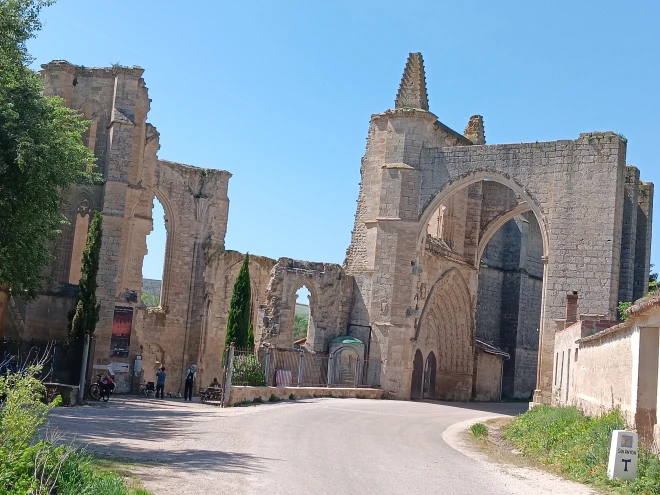
The first time I walked the Camino Frances, I noticed the broken walls and arches that remained, and I paused to take a picture. The next time, I went inside the gate and looked around. The ruins are of the 14th century convent of St. Anthony of Egypt, the place known as Arco San Anton. In the early centuries of the Camino, bread would be left for pilgrims in alcoves in the archway (“arco”). Today, coffee and conversation is offered to hundreds of passing pilgrims, and that is what I got two years ago.
This year, thinking it would be good to stay there, I got more. I arrived around 3 p.m. and there was still one bed—which was given to me. This is an unusual albergue. It is situated within the ruins. There are three rooms. One is the dormitory: twelve bunk beds (close together) with floor space for a couple of cots. The second room is the kitchen. These two rooms share a high ceiling, and smells and sounds travel from one to the other. The third room is a shower, sink, and toilet. Did I mention, there is no electricity? No hot water? And perhaps most challenging of all, no wi-fi?
Yet, every bed was taken, most of them by people half my age or younger. And it wasn’t just the price, although that too is very old Camino: donativo, pay what you want. The hosts—a pair of volunteers; there are new hosts every few weeks—organized our dinner and prepared our breakfast, and we joined in various ways with the chores.
__ At dinner, taken outside as the sun was setting, we each said our name and where we were from. Many people said also something personal, perhaps giving the reason they were walking. I found them amazing. There was someone about to go to work for IBM in Dutchess County, New York—my old stomping grounds. There was a French Canadian fellow who had just passed the bar and was soon to work as a lawyer. There was a Dutch woman who had recently completed a degree in international relations and was soon to work for army intelligence. On the other end of life, there was a man of many practical skills who had worked in Switzerland for years but now had nothing there, and (as best I could tell; much of this comes in translation) has been sleeping on church porches and the like for several years. All of them were interesting individuals, many of them conscious of the way they were being touched by the Camino. All together, it was a fascinating window into a very small piece of the immensity of what God is up to every day among us.
But there was also the temporal layer. We were having this wholesome, delicious yet simple meal of salad, lentil soup, and bread pudding, in the ruins of something that had been built 700 years ago. We were in a place where religious people had lived and prayed and worked, day after day, eating their own simple meals. For these hundreds of years, pilgrims had walked passed this place, on their way to Santiago de Compostela and then also on their way back home. That too is a window for our contemplation.
In 2026 God is working (at one and the same time) through many people and in so many ways we cannot possibly grasp. But turn off the wi-fi, turn off the electricity, turn off the hot water, step outside into a place that’s off the usual road, and you might be able to feel how God was doing that, with people like us, 500 years ago, 1000 years ago, and maybe on ground not unlike that which you are standing on.